- Have any questions?
- +(305) 263-6969
- info@allinoneemployment.com


Resume Distribution Services That Reach the Right Hires
November 8, 2026
A vacant role has a cost long before it appears on a payroll report. Managers cover extra work, projects slow down, customer service can suffer, and strong employees may start looking elsewhere. That is why the question of internal recruiting versus agency support is not simply about who posts the job. It is about who can deliver a qualified person with the skills, judgment, and commitment to perform well in your specific environment.
For many South Florida employers, the best answer is not always one model or the other. The right choice depends on the urgency of the role, the strength of your internal hiring team, the difficulty of finding the required talent, and the risk of getting the decision wrong.
Internal Recruiting Versus Agency Recruiting: The Core Difference
Internal recruiting means your company owns the process from start to finish. Your HR team, manager, or dedicated talent acquisition staff writes the job description, promotes the opening, reviews applications, interviews candidates, checks references, and manages the offer. This approach gives the business direct control over its employer message and candidate experience.
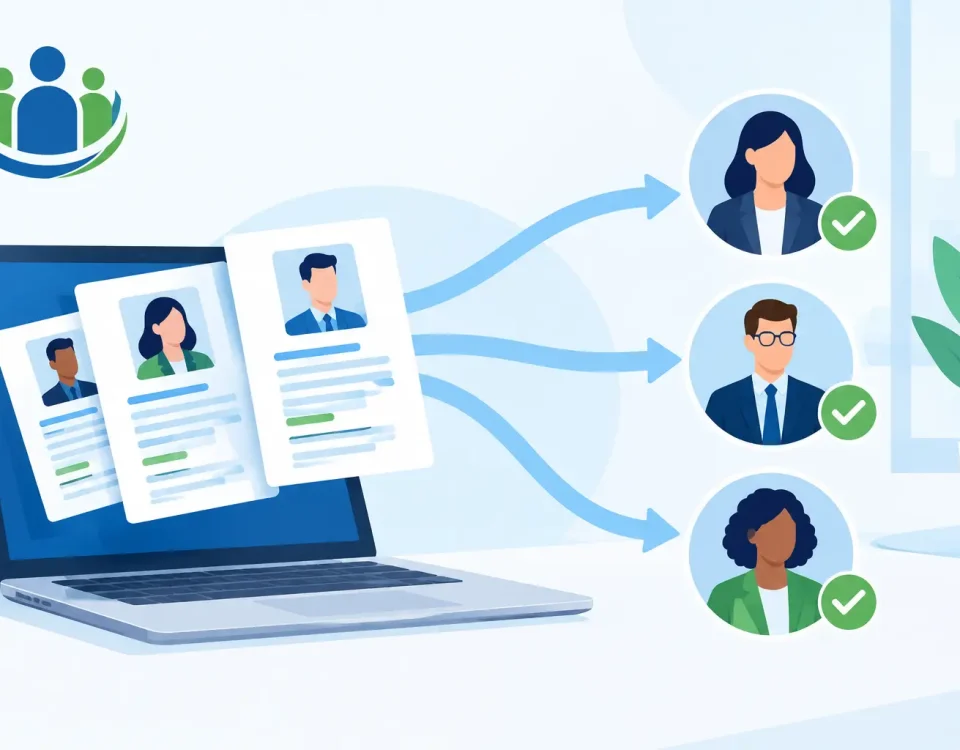
Agency recruiting brings in an outside partner to manage all or part of that work. A quality recruitment firm learns the role, represents your company in the market, searches beyond incoming applicants, interviews and evaluates prospects, and presents a focused shortlist. Your leaders remain responsible for the final decision, but they spend their time meeting candidates who have already been screened for fit.
Neither approach automatically produces better hires. The difference is in capacity, access, process discipline, and accountability.
When Internal Recruiting Makes Sense
An internal process can be highly effective when hiring is predictable and your organization already has the right resources in place. A company with an experienced recruiter, clear compensation ranges, a recognized employer brand, and a steady flow of applicants may fill recurring positions efficiently on its own.
Internal teams also have unmatched proximity to the business. They understand how teams communicate, what success looks like after 90 days, and which personalities thrive within the culture. For roles with a large local talent pool, that knowledge can make internal hiring both practical and cost-conscious.
The challenge appears when internal staff are asked to do more than their workload can support. Posting a role may generate resumes, but reviewing them carefully, following up quickly, conducting structured interviews, validating skills, and checking references takes significant time. If the hiring manager is handling recruiting between operational responsibilities, promising candidates may accept another offer before the process reaches them.
Internal recruiting can also become limited by visibility. A job post usually reaches people who are actively applying. Many high-performing professionals are employed and not submitting applications, yet they may consider the right opportunity when approached confidentially and professionally.
When an Agency Adds More Value
A recruitment agency is especially useful when a position is business-critical, difficult to fill, confidential, or time-sensitive. It can also be the stronger option when a company needs a specialized skill set but does not hire for that function often enough to justify an in-house sourcing team.
The best agencies do more than forward resumes. They ask detailed questions about the responsibilities, reporting structure, required capabilities, work style, compensation expectations, and reasons the position is open. That discovery work matters because a technically qualified candidate is not always the right hire for the team or the role’s real demands.
An agency also expands the search. It can contact passive candidates, search its existing network, distribute openings broadly, and speak with professionals who may never see your job posting. For employers competing in Miami, Doral, Coral Gables, and across South Florida, broader reach can be the difference between settling for an available applicant and choosing a proven contributor.
At ALL IN ONE Employment Services, the recruiting process is built around candidate evaluation rather than volume. Behavioral interviews, functional assessments, skills testing, reference checks, and video-based interview support help employers see more than a resume. That extra diligence can reduce the risk of a costly mismatch, particularly for direct-hire and leadership roles.
Compare the Cost Beyond the Fee
The most common objection to agency recruiting is the placement fee. It is a fair question, but it should be compared with the full cost of an unfilled or poorly filled role, not just the visible expense of posting a job.
Internal recruiting has costs too: recruiter salaries, job advertising, screening tools, background checks, management interview time, lost productivity, and the opportunity cost of a longer vacancy. These expenses can be spread across many hires, which makes internal recruiting attractive for organizations with consistent hiring volume. But for an occasional specialized search, building the process internally may cost more than it appears.
A recruiting agency makes its cost more defined. You know what outside support is being purchased, and a strong firm should explain what is included in its search and evaluation process. Replacement protection also deserves attention. A 180-day replacement guarantee, for example, creates meaningful accountability after the hire starts. It does not eliminate every hiring risk, but it signals that the recruiting partner stands behind the quality of its work.
Speed Depends on Process, Not Pressure
Companies often assume internal recruiting is faster because there is no outside party involved. That can be true when the internal team has available capacity and an established candidate pipeline. But speed disappears when approvals stall, interview feedback is delayed, or no one has time to source beyond applicants.
Agency recruiting can move quickly because searching and screening are the agency’s daily work. A recruiter can begin contacting relevant professionals while your team remains focused on serving customers and operating the business. Still, an agency cannot overcome a slow client process. Delayed interview scheduling, unclear decision-making, or changing requirements will extend any search.
The fastest hiring model is one with a clear job profile, a responsive decision-maker, realistic compensation, and a defined interview process. Whether the search is internal or external, candidates notice when an employer is organized.
Screening Is Where Hiring Risk Changes
A resume is a starting point, not proof that someone will perform. The strongest hiring process tests the claims that matter most for the position. That may include technical knowledge, communication ability, reliability, leadership style, industry experience, or the capacity to work in a bilingual customer environment.
Internal teams can create this level of rigor, but it requires consistent standards and time. Without a structured process, interviews can become informal conversations driven by instinct. Instinct has a role, yet it should not replace evidence.
An agency should add discipline by qualifying candidates before they reach your calendar. Ask how it assesses skills, handles behavioral interviewing, verifies work history, conducts reference checks, and evaluates job-specific fit. If a firm cannot clearly explain its screening process, you may simply be paying for more resumes rather than better candidates.
A Hybrid Model Often Produces the Best Results
Many growing businesses do not need to choose one permanent model. They use internal recruiting for routine, high-volume openings and engage an agency for hard-to-fill positions, executive searches, confidential replacements, or urgent growth needs.
This division lets internal teams protect the employer brand and manage ongoing talent needs while giving leadership access to outside market intelligence when the stakes are higher. An agency can also help recalibrate a search when the market is not responding. Perhaps the compensation is below market, the required experience is too narrow, or the job description combines responsibilities that usually belong to two roles.
Consider agency support when any of these situations apply:
- The role has remained open long enough to affect revenue, service, or team morale.
- Your team is receiving applicants but not meeting qualified, interview-ready candidates.
- The position requires specialized experience, leadership ability, or a confidential search.
- Hiring managers do not have time to source, screen, and follow up consistently.
Choose a Partner, Not a Resume Vendor
If you decide to work with an agency, evaluate how it works before comparing fees. A recruiting partner should ask thoughtful questions, communicate honestly about the talent market, and explain why each candidate is being presented. It should be responsive when priorities change and direct when expectations need adjustment.
Look for evidence of ownership. Does the agency conduct meaningful interviews? Does it test and verify candidates where appropriate? Does it provide a clear replacement policy? Does it understand that a successful placement must work for both the employer and the professional being hired?
The right hiring decision is rarely about doing everything internally or outsourcing everything. It is about putting the right level of expertise behind the roles that will shape your team, your service, and your next stage of growth.