- Have any questions?
- +(305) 263-6969
- info@allinoneemployment.com

Staffing Agency Miami Firms Trust for Better Hires
August 21, 2026
10 Best Ways to Find Candidates Who Deliver
August 24, 2026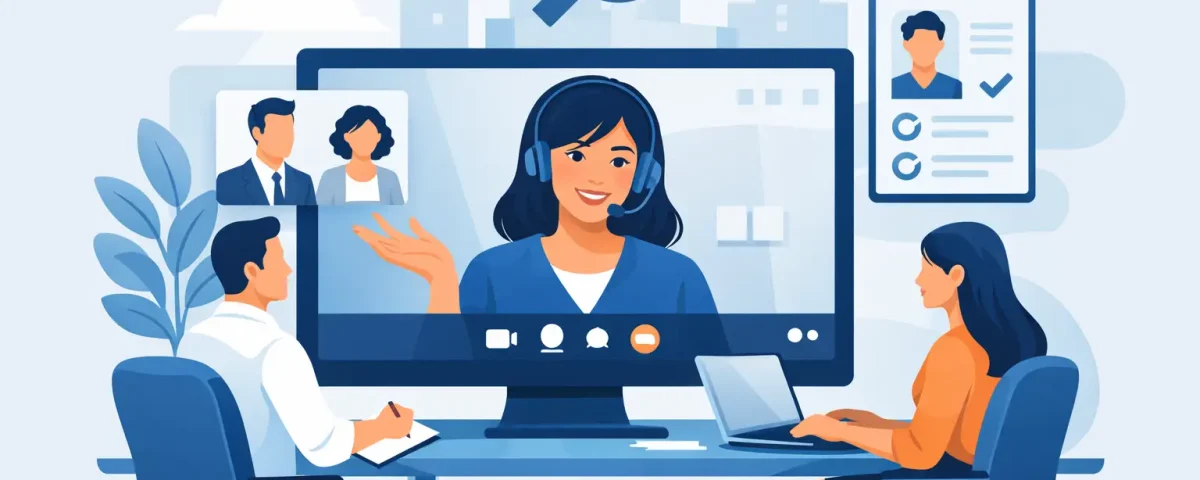
A qualified candidate can look excellent on paper and still be the wrong hire. Video interview hiring gives employers an earlier, clearer view of how a person communicates, prepares, thinks through problems, and represents themselves before bringing them into the final selection process.
For growing businesses, that visibility matters. A delayed hiring decision can put pressure on the rest of the team, while a rushed decision can create costly turnover. The goal is not to replace human judgment with a screen. It is to make that judgment more informed, consistent, and efficient.
Why Video Interview Hiring Works
A resume tells you where a candidate has worked. A well-run video interview shows how they may work with your team. Within a short conversation, hiring managers can evaluate professionalism, communication style, confidence, attention to detail, and the candidate’s understanding of the role.
This is particularly valuable when multiple decision-makers need input. Instead of coordinating several introductory meetings, a recruiter can conduct and record an initial interview, then share the candidate’s responses with the appropriate stakeholders. Leaders can review qualified candidates on their schedule without slowing down the process.
For candidates, video interviewing can also reduce unnecessary friction. They can have an initial conversation without taking extensive time away from their current responsibilities or traveling across Miami-Dade, Broward, or Palm Beach County for a meeting that may not advance. That creates a more respectful experience while allowing employers to move quickly when they find the right fit.
Speed, however, is only useful when quality stays high. Video interviews work best as one step in a disciplined evaluation process that includes resume review, targeted questions, skills testing when appropriate, behavioral interviewing, and reference checks.
What Employers Can Learn in a Video Interview
The strongest interviews go beyond broad questions such as, “Tell me about yourself.” They connect directly to the position, the work environment, and the results the new employee must deliver.
A candidate for a customer-facing role should be able to explain how they handle a frustrated client, prioritize competing requests, and communicate clearly under pressure. For an accounting, operations, sales, or management position, the questions should uncover relevant judgment, technical knowledge, accountability, and leadership habits.
Behavioral questions are especially effective because they ask for evidence rather than promises. Ask a candidate to describe a difficult project, their role in the outcome, the action they took, and what happened next. Specific examples reveal much more than a polished statement about being hardworking or detail-oriented.
A video conversation also helps identify whether the candidate has done their homework. Prepared professionals can explain why the role interests them, how their experience relates to the company’s needs, and what they would hope to accomplish in the first several months. This does not mean every strong candidate will have a perfect answer. It means they should show genuine engagement and a reasonable understanding of the opportunity.
At the same time, employers should be careful not to overvalue presentation alone. Some excellent professionals are less comfortable on camera, especially early in the process. A candidate’s communication ability should be assessed in proportion to the role. A sales leader and a back-office specialist may require very different strengths.
Create a Process That Produces Comparable Answers
An unstructured interview often creates an unfair comparison. One candidate receives detailed questions about leadership, while another spends most of the meeting discussing their resume. The result is a collection of impressions rather than reliable hiring information.
Start by identifying the few qualifications that are truly nonnegotiable. These may include industry experience, technical capability, bilingual communication, leadership experience, schedule requirements, licensing, or the ability to manage a specific type of workload. Then build questions that allow each candidate to demonstrate those qualifications.
Use the same core questions for every finalist. You can still ask follow-up questions based on an individual’s background, but a consistent foundation makes it easier to compare candidates fairly. It also keeps interviewers focused on job-related criteria instead of personal similarities or first impressions.
Before the interview, decide who will participate and what each person needs to assess. Too many interviewers can make a conversation feel like an interrogation. A smaller group is usually more productive, especially for the initial meeting. If several leaders need to weigh in, recorded video interviews can help them review the same information without requiring the candidate to repeat themselves.
A simple evaluation scorecard is helpful. Rate the candidate against the role’s key requirements, record specific examples from their answers, and note any questions that need verification. This creates a clearer basis for the next step and protects the process from being driven by the loudest opinion in the room.
Make the Candidate Experience Match Your Standards
The interview itself sends a message about how your organization operates. If the meeting begins late, participants appear unprepared, or the technology fails without a backup plan, candidates notice. Top professionals are evaluating employers just as carefully as employers evaluate them.
Send the meeting details in advance, including the expected length, the names of participants, and any preparation instructions. Test the platform, camera, microphone, and internet connection before the interview begins. These small steps show respect for the candidate’s time and help the discussion stay focused.
During the interview, explain the role honestly. Strong candidates appreciate clarity about responsibilities, team structure, expectations, work schedule, and the challenges they may face. Overselling a position may secure an acceptance, but it does not create a long-term fit.
Be transparent about next steps as well. If the team expects to make a decision within several days, say so. If skills testing, reference checks, or an additional interview will be part of the process, let candidates know early. Clear communication keeps qualified people engaged and reduces the chance that they accept another offer while waiting for an update.
Common Video Interview Hiring Mistakes
The most common mistake is treating the video interview as a shortcut rather than a screening tool with real standards. A quick conversation is not a substitute for evaluating credentials, verifying experience, and checking references for positions where those steps matter.
Another mistake is relying too heavily on technology. Poor lighting, an unstable connection, or a candidate’s unfamiliarity with a platform should not automatically disqualify someone. Give candidates reasonable instructions and a chance to resolve technical issues. Focus on the abilities that actually affect performance in the role.
Employers should also avoid making decisions based on visual cues unrelated to the job. Keep the discussion professional, job-focused, and consistent for all candidates. The strongest hiring processes evaluate competence, behavior, and fit with the work itself.
Finally, do not let a promising video interview sit without follow-up. Qualified people are often in active conversations with other employers. Fast response does not mean careless response. It means your team has a clear process for reviewing interview feedback, deciding who advances, and communicating promptly.
When Recruiting Support Makes the Difference
Video interviewing is most effective when it is part of a larger recruiting strategy. The right recruiting partner can source candidates, review resumes, conduct preliminary interviews, assess job-specific skills, verify references, and present only the professionals who meet the role’s requirements.
That approach saves hiring managers from spending hours sorting through applicants who are unavailable, unqualified, or not aligned with the position. It also provides candidates with a more organized path forward. They receive clear information, thoughtful consideration, and an opportunity to show more than what fits on a resume.
At ALL IN ONE Employment Services, video-based interview support is used alongside rigorous screening and evaluation to help employers make confident hiring decisions. For permanent placements, the focus is not simply on filling an opening quickly. It is on presenting professionals with the integrity, productivity, commitment, and job-specific fit to contribute from day one.
The best video interview does not create a decision by itself. It gives the right people the evidence to make a better one – with less delay, less guesswork, and greater respect for everyone involved.

3 Comments
[…] screening, behavioral interviews, functional assessments, skills testing, reference checks, and video-based interview support. A high-touch recruiting process also creates accountability: the hiring partner should understand […]
[…] beyond resumes through interviews, functional assessments, skills testing, reference checks, and video-based interview support when […]
[…] room to ask questions. Listen to the answer instead of simply moving through a script. For video interviews, test the technology and choose a private, professional […]